
Hey, let’s slow down for a second. If you’ve ever wondered why some businesses just pop up everywhere online while others sit on page five, well, here’s the thing. It’s usually not luck. It’s strategy. And that strategy, most of the time, is something called Search Engine Marketing. I’m Lawrence Pereira, and honestly, after working with multiple clients across industries, I’ve seen how Search Engine Marketing can change everything. And fast.
So, look, Search Engine Marketing isn’t complicated once you break it down. And you’re about to see why it’s such a big deal for any brand trying to get attention, traffic, or sales online. And yes, you’ll find the focus keyword right here in the first paragraph because good SEO starts early.
But let me talk to you directly now. You’re not here for jargon. You’re here to understand how Search Engine Marketing works in real life. And you’re about to. Let’s dive in.
So, What Exactly Is Search Engine Marketing?
Well, to put it simply, Search Engine Marketing (sometimes called SEO marketing) is the art and strategy of showing ads on search engines like Google and Bing. You pay to show up. You pay to get seen. But you don’t just throw money in and hope something sticks. You tell the platform, “Hey, show my ad when someone searches for this keyword.” And boom, you’re on the results page instantly.
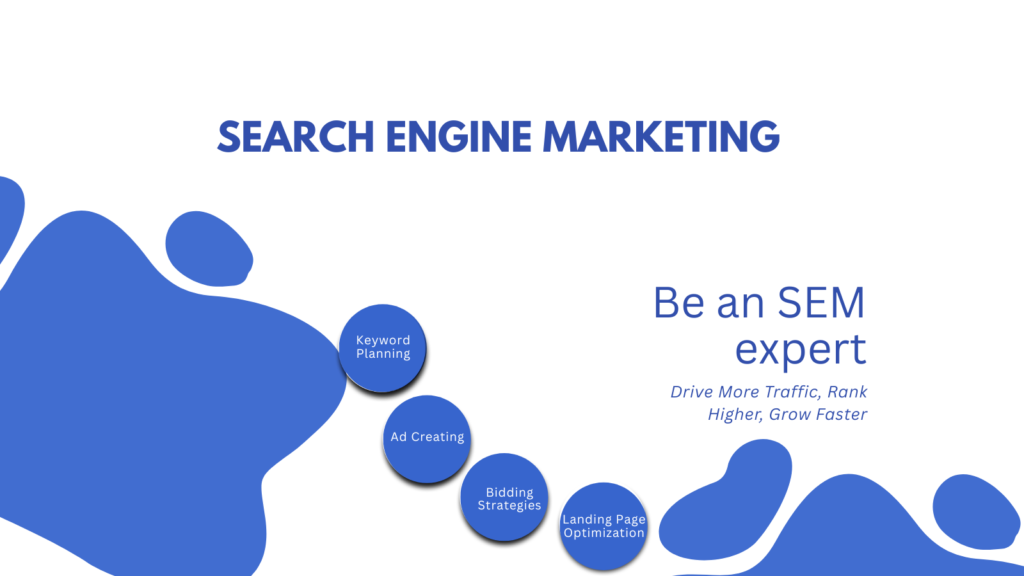
It sounds simple, right? But behind the scenes, Search Engine Marketing is a mix of:
- Keyword planning
- Ad creation
- Bidding strategies
- Landing page optimization
- Constant testing
And even though that looks like a list from a textbook, trust me, this stuff feels very real when you’re spending actual budgets every single day for clients who want results. I’ve seen campaigns that turned a dying business into a thriving one in just a few weeks when done right.
Why Search Engine Marketing Works So Well
Look, here’s the magic. People search because they need something right now. They’re ready. They’re actively looking. So, if your ad shows up in that exact moment, you win their attention. And maybe their purchase.
Now, good Search Engine Marketing lets you show ads to people:
- When they’re searching
- Where they’re searching
- Exactly how they’re searching
- And sometimes before they even know what they want
That’s powerful. And it’s why businesses love SEM. They get visibility almost immediately, unlike SEO, which takes time to warm up.
But there’s another reason I always tell my clients to invest in Search Engine Marketing: control. You get total control over budget, timing, audience, keywords, location, devices, everything. Which means if something works, you scale it. If something doesn’t, you cut it. No drama.
The Two Big Pillars of Search Engine Marketing
Now, let’s keep this simple but real. Search Engine Marketing usually has two main parts:
A. Paid Search Advertising (PPC)
This is what most people think of first. You pay money. Your ad shows up. Someone clicks. You pay again. But here’s the payoff: you only pay when someone actually clicks your ad. Not when they simply see it.
Paid search ads appear on:
- Google Search
- Bing Search
- Partner networks
They’re fast. They’re targeted. And they can be incredibly profitable when done right.
B. Shopping Ads
Shopping ads show product images, prices, store names, and sometimes reviews. They’re perfect for eCommerce brands that need attention fast.
And trust me, when a user sees a picture of exactly what they want plus the price upfront, the chances of a quick purchase go way up.
How I Use Search Engine Marketing for Real Clients
You know what? Let me talk straight for a moment. Every time I work with a client—whether it’s education, healthcare, retail, food, or even B2B—I always start with one question:
“What’s the real goal here?”
Because SEM isn’t only about clicks. It’s about intent. You want sales. You want leads. You want signups. So Search Engine Marketing should be designed for that.
Here’s how I usually build campaigns:
1. Keyword Strategy Built on Real Intent
I don’t chase broad keywords blindly. Instead, I group keywords into three buckets:
- High-intent keywords – people ready to buy
- Research keywords – people comparing options
- Problem keywords – people figuring out what they need
And look, not all keywords deserve money. Some keywords are curiosity-based and burn budgets. So treating them carefully is the first step.
2. Ad Copy That Sounds Human, Not Robotic
Most ads look the same. But when I write ads, I focus on:
- Real benefits
- Strong value
- Quick clarity
- Action-focused language
If an ad sounds like a sales pitch, people skip it. If it sounds like a real person solving a real problem, conversion rates jump.
3. Landing Pages Designed to Convert
Here’s something people often miss. Your Search Engine Marketing campaign is only as strong as your landing page. I’ve seen amazing ads lead to terrible pages—and the whole campaign collapses.
So what do I look for?
A. Clear headline
B. Zero distractions
C. Fast loading
D. A strong offer
E. A simple CTA
And when all of that flows naturally, conversions go up—sometimes dramatically.
The Real Costs Behind Search Engine Marketing
You’re probably thinking, “Okay Lawrence, but how much does this cost?” Well, here’s the truth: it depends. Search Engine Marketing costs change based on competition, industry, location, keywords, and even time of day.
But generally, ads become more expensive when:
- Competition increases
- Demand spikes
- Too many businesses bid on the same keyword
Yet, even with rising costs, Search Engine Marketing still works because you can track every rupee, every click, every conversion. Nothing hides behind guesswork.
Smart Bidding: The Backbone of Modern SEM
Google’s AI bidding strategies are powerful—but only when used properly. And yes, this is where I see many advertisers struggle because smart bidding needs data. If you run tiny campaigns with low data, the algorithm can’t learn.
Here are the most useful strategies:
1. Maximize Clicks
A beginner-friendly approach that gets traffic fast. But not ideal for conversions.
2. Maximize Conversions
An AI-driven strategy that automatically finds users who are more likely to convert.
3. Target CPA
You tell Google the cost per acquisition you want. It tries to deliver within that target.
4. Target ROAS
Perfect for eCommerce businesses that measure revenue from each ad click.
Smart bidding can transform Search Engine Marketing when handled correctly, but it also requires patience and data. I’ve seen campaigns that look terrible in week one suddenly become money-making machines in week four.
Search Engine Marketing vs SEO: Let’s Clear This Up
People always confuse the two. So let’s break it down quickly:
- SEO = organic rankings
- SEM = paid ads
SEO takes time. SEM is immediate. But here’s something people forget—they work best together. In fact, many of my biggest successes came from combined SEO + SEM strategies.
Think of SEO as building a house. It’s slow. But it lasts.
Think of SEM as renting a house. It’s fast. But you pay monthly.
Smart brands invest in both.
Common Mistakes People Make in Search Engine Marketing
Now let’s get real. I’ve seen people burn budgets in hours. Here are mistakes to avoid:
A. Bidding on Broad Keywords Too Soon
It drains money instantly.
B. Not Using Negative Keywords
Negative keywords save money by blocking unqualified searches.
C. Ignoring Mobile Optimization
Mobile users dominate search traffic. If your page isn’t mobile-friendly, conversions fall.
D. Weak Ad Copy
If the ad looks boring, people scroll past instantly.
E. No Tracking Setup
If you’re not using conversions, you’re flying blind.
Tools I Use Daily for Search Engine Marketing
Here are the major tools I rely on:
Free Tools
A. Google Keyword Planner
B. Google Trends
C. Google Analytics
D. Google Search Console
E. Microsoft Advertising Keyword Planner
Freemium/Paid Tools
- SEMrush
- Ahrefs
- SpyFu
- Optmyzr
- Adalysis
Tools make Search Engine Marketing faster and more predictable. And when used well, they help you scale campaigns smoothly.
The Future of Search Engine Marketing
Let’s talk about where things are going. AI is changing everything. Automation is taking over bidding. Responsive ads now adjust automatically. Search Engine Marketing is becoming smarter, more predictive, and more personalized.
But here’s something I believe. No matter how advanced AI gets, human strategy still wins. Understanding user behavior, emotions, desires—machines don’t fully grasp that yet. And that’s where experts like me come in.
Search Engine Marketing is moving toward:
- Predictive bidding
- AI-driven ad creation
- Hyper-targeted audiences
- Integrated SEO + SEM dashboards
- Voice search campaigns
- Personalized ad variations
It’s fast, exciting, and evolving every month.
Final Thoughts Before We Move to the FAQ Section
So, you’ve walked through everything—from what Search Engine Marketing means to how I use it for clients, all the way to bidding, strategy, mistakes, tools, and the future. And if you’ve reached here, you’re already ahead of 90 percent of marketers who treat SEM like guesswork.
Search Engine Marketing works when it’s done with intent, clarity, and real understanding. And honestly, once you get the hang of it, you’ll see how quickly it can transform traffic, leads, and sales.
Frequently Asked Questions
1: So… what’s Search Engine Marketing really doing behind the scenes?
Well, let me think this through the way I usually explain it to clients. Search Engine Marketing looks simple outside, but inside it’s constantly… shifting. Ads enter auctions every single time someone searches. And then, you know, Google checks bids, relevance, landing page experience. Sometimes the best ad doesn’t win just because it paid more. Sometimes it’s the one that feels more helpful. Funny, right? But Search Engine Marketing is basically this always-moving system that tries to show the right ad, at the right second, to the right person. Not perfect, but pretty close.
2: Do small businesses really get results with Search Engine Marketing?
Short answer: yes. Longer answer: well, depends on how smart the setup is. I’ve seen tiny shops outperform big brands because they picked better keywords. Or because they were more clear about what they wanted. And honestly, some days you’ll think it’s working great… other days you’ll wonder why clicks slowed down. That’s normal. SEM breathes a little. So yeah, small businesses absolutely win with it, but they need patience and a clean plan.
3: How much money should I spend when I’m just getting started?
Hmm, this one’s tricky because budgets feel personal to people. But if I talk the way I talk to my clients—well, you start with enough to gather real data. Maybe not huge. Maybe not tiny either. Something that lets Google actually learn. Some people start with thirty dollars a day. Some more. The real thing is… don’t expect miracles on day one. Give it a week or two, watch the signals come in, then decide if you’re raising or lowering. SEM is one of those “learn while doing” platforms.
4: Why do some keywords cost way more than others?
Oh, this one causes confusion all the time. So, look, keyword pricing is like… an auction mixed with demand mixed with competition mixed with timing. And sometimes you’ll notice a keyword that should’ve been cheap suddenly jumping in cost. Happens when your competitors also push ads hard on the same intent. And you think… wait, why today? No perfect answer. SEM markets move. But the core reason is simple: more advertisers fighting for the same audience drives keyword prices up. Basic economics, just much faster.
5: Is SEM better than SEO or are they just… different?
Okay, let me say this the way I say it in real conversations. They’re different but also the same but also… not quite. I know, sounds messy. SEO builds long-term trust. SEM buys visibility instantly. But here’s the twist—when you use both together, weirdly, they lift each other. SEO makes your relevance stronger. SEM speeds up traffic while SEO grows. They overlap in data, keywords, user behavior. So calling one “better” misses the point. They’re two sides of the same growth strategy.
6: Why do my ads get clicks but not conversions?
Ah, classic frustration. And honestly, it’s not always your fault. Sometimes the landing page isn’t saying what the ad promised. Sometimes people click out of curiosity. Sometimes your competitors click. Sometimes there’s nothing wrong at all—it’s just not the right audience mood that day. I’ve watched campaigns convert like crazy on one afternoon and then… nothing the next morning. What matters is checking the alignment between keyword → ad → landing page. If one of those three feels off, conversions drop.
7: How long before Search Engine Marketing starts showing real results?
If I’m being straight with you? It depends on data, industry, competition, and how clean your setup is. Some ads work within hours. Others take… a bit. Maybe a week. Maybe slightly more if bidding is learning slowly. And sometimes—I’ve seen this—you make one tiny change and boom, the whole thing wakes up. But overall, expect the first few days to feel like calibration, and the next week to feel like “okay, now I see what’s happening.” SEM grows sharper the more data you feed it.