
If you’ve ever wondered why some websites magically show up at the top of Google, here’s the thing. It isn’t magic. It’s Search Engine Optimization, and it’s exactly what I work on every single day with my clients. I’m Lawrence Pereira, an SEO Specialist managing multiple brands, and honestly, once you break SEO down into human language, the whole thing starts feeling way less scary. So today, I’m walking you through what I actually do, why it works, and how you can use the same thinking to grow your own site.
But real talk: we’re keeping this entire guide so simple that even a young kid could follow it. Short words. Easy flow. Natural tone. No fluff. No stiff textbook jargon. Just a friendly walk through the SEO world—kind of like we’re talking over coffee, except you get all the secrets.
So, What Is Search Engine Optimization Really About?
Let’s slow down for a second. People throw around this term like everyone just gets it. But most folks don’t. And that’s okay.
Search Engine Optimization, or SEO, is just the process of helping search engines understand what your website is about. When Google understands you clearly, it knows when and where to show your site. Simple.
But here’s the payoff. When your site shows up more often and in better positions, more people click. When more people click, more people buy, sign up, learn, trust, or follow you. Boom.
Yet, you don’t “trick” Google to get there. You work with it.
Why I Focus on Human-First SEO With Every Client
You know what happened early in my career? I realized that SEO isn’t actually about Google first. It’s about people. When humans understand your message, Google picks up on that.
When I’m working with a client, here’s how I explain it:
- If people can’t read your site easily, Google won’t like it.
- If people can’t find what they’re searching for, Google will notice.
- If people bounce fast, trust me, Google knows.
So, the more human your content feels, the more aligned your SEO becomes. And you’ll see this theme through everything I teach.
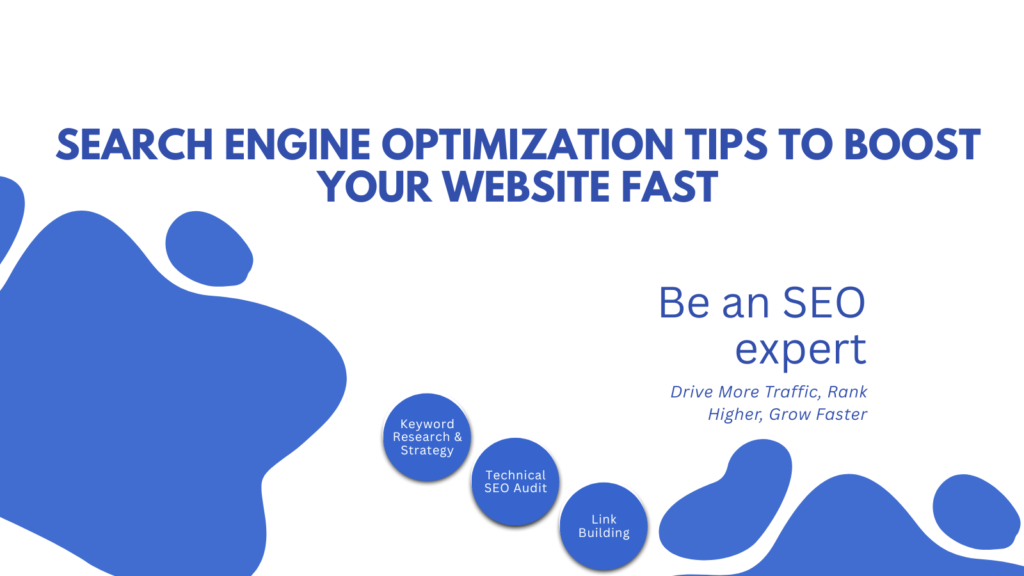
The Three Big Pillars of Search Engine Optimization
You could easily break SEO into a thousand steps. But you don’t need that. You only need three.
1. On-Page SEO
This is the stuff you can see. Words. Headings. Links. Structure. URLs. Images. Everything we touch on your website to make Google understand your topic better.
Here are the parts I use with my clients:
A. Content
B. Keywords
C. Headings
D. Internal links
E. Image optimization
F. URL structure
Now look, each one matters. But don’t overthink it. When you’re clear, Google is clear.
A. Content That Sounds Human Wins
Search engines don’t want robotic content. They want natural, flowing words. Short sentences. A mix of long ones too. Real talk. Real tone. This is why my style tends to break patterns, create rhythm, and let the words breathe.
B. Keywords Aren’t Stuffing Points
People think SEO is about repeating words 90 times. Nope. I tell clients that keywords are simply “signals.” You drop the right signals, and Google knows your topic.
The keyword today — Search Engine Optimization — should feel natural, not forced.
C. Headings Are Road Signs
Headings don’t just organize your content. They tell Google, “Hey, this section is about this topic.”
Use H1 once. Use H2, H3, H4 as needed. Clean. Simple.
D. Internal Links Build a Map
When you link your own pages together, Google sees your site structure. Visitors also find things faster. Win-win.
E. Image Optimization Helps More Than You Think
Well, people forget images talk to Google too. You have to:
- Compress them
- Rename them
- Add alt text
If you skip this, you’re leaving SEO wins on the table.
F. Short URLs Work Better
Google prefers clean URL slugs, not long messy ones. Keep it neat.
Off-Page SEO
Off-page SEO is everything that happens outside your website to build trust. When other sites talk about you, when people share your links, when your brand spreads—Google sees you as more legit.
Here’s how I explain it to clients:
- Backlinks
- Brand mentions
- Profiles and directories
- Social signals
Let’s break these down in plain English.
Backlinks Are Votes
When a good website links to you, Google thinks, “Hmm, this must be trustworthy.” Not all links are equal, though. One strong link is better than 500 weak ones.
Brand Mentions Matter
Sometimes your brand gets mentioned even without a link. Google still sees that you’re part of the conversation.
Your Profiles Help Google Trust You
When you have consistent business details across the internet, it builds reliability. That’s why I always clean up NAP data for local clients.
Social Signals? They Do Play a Role
Look, no one knows the exact weight, but when your content spreads, Google sees activity. And that activity helps your authority climb.
3. Technical SEO
This piece is usually where people freeze. But I’ll keep it simple. Technical SEO is everything that keeps your website running smoothly.
If on-page SEO is your house and off-page SEO is the neighborhood talking about your house, technical SEO is the foundation and plumbing.
Here’s the simple checklist every website needs:
A. Speed
B. Mobile friendliness
C. Indexing
D. Sitemaps
E. Site security
F. Structured data
A. Speed Is Everything
If your pages load slow, people bounce. If they bounce, rankings drop. Speed isn’t optional.
B. Your Site Must Work on Phones
Most searches come from mobile. If your site breaks on small screens, Google will push you down.
C. Google Must Be Able to Index You
If your pages aren’t indexed, they don’t exist online. It’s that simple.
D. Sitemaps Are Like Menus
You give Google a neat guide to all your pages. Makes crawling your site easier.
E. HTTPS Builds Confidence
Google prefers secure sites. Visitors do too.
F. Structured Data Helps Search Engines Understand Context
You’re basically labeling your content so search engines get your meaning faster.
How I Build SEO Strategy for My Clients
You know, people assume SEO happens in random steps. But no. There’s a method I follow every time.
Here’s my personal framework:
- Understand the business
- Understand the user intent
- Do deep keyword research
- Create content that solves problems
- Optimize the technical foundation
- Build authority with backlinks
- Track everything and adjust
Step 1: Understand the Business
SEO isn’t a copy-paste formula. What works for a bakery won’t work for a tech SaaS company. I start by learning the brand.
Step 2: Understand User Intent
Not all searches mean the same thing. Some users want answers. Some want products. Some want comparisons.
Matching intent with content is one of the biggest ranking factors today.
Step 3: Keyword Research
This is where the fun begins. I look for:
- Primary keywords
- Secondary keywords
- Long-tail phrases
- Semantic/LSI phrases
- Question-based searches
These layers help search engines deeply understand the topic and rank your content for dozens of related queries.
Step 4: Create Content That Actually Helps
I tell clients: Don’t write to rank. Write to help.
When users stay longer, scroll more, click deeper, and return again, Google gets the message.
Step 5: Fix the Technical Stuff
You can’t rank well on a broken foundation.
Step 6: Build Authority
One strong backlink from a respected source can change everything.
Step 7: Track and Adjust
SEO isn’t set-and-forget. It’s a living system. I track keywords, behavior, clicks, impressions, CTR, and make adjustments.
Why Search Engine Optimization Still Works Better Than Paid Ads
Well, here’s the truth most business owners don’t realize. Paid ads stop the second your budget stops. SEO keeps working for years.
Here’s how I explain it:
- SEO builds long-term visibility
- SEO grows trust
- SEO improves user experience
- SEO lowers your cost per acquisition
- SEO fuels all your marketing channels
You invest once, and the value compounds. And yes, I tell clients to use both SEO and SEM, but I always push SEO for long-term growth.
Mistakes I See People Make With Search Engine Optimization
I’ve worked with enough clients to see patterns. Some mistakes keep showing up.
1. Creating content only for keywords
Keyword stuffing still happens in 2025. It kills rankings. It kills trust. It kills engagement.
2. Ignoring search intent
When users land on your page and don’t find what they expected, they leave. Google sees that fast.
3. Not having a content plan
Random posts don’t build authority. You need structure.
4. Slow websites
A slow site is an SEO killer.
5. No internal linking
Your content becomes isolated, so Google struggles to understand your topical map.
So, Does SEO Take Time? Yes. But Here’s the Good Part.
SEO isn’t instant, but it also isn’t slow for the sake of being slow. You’re building trust. You’re building authority. Google watches patterns. Real patterns.
When I tell clients “give it 3–6 months,” it’s not because I’m guessing. It’s because I know how long authority cycles take.
But once the growth begins, it rarely stops.
Final Thoughts Before We Move to FAQs
Search Engine Optimization is powerful, but only when done the right way. You don’t need tricks. You don’t need shortcuts. You need clarity, relevance, speed, intent alignment, and value.
And the good news? You can start improving your SEO today with just basic steps.
The more human your content becomes, the more search engines trust you.
Frequently Asked Questions
1. What’s Search Engine Optimization, really, if we strip away the fancy stuff?
Honestly, the simplest way I explain it to clients is this. You’ve got a website, and you want people to find it without paying for every click. Search Engine Optimization is just the slow, steady process of helping Google understand what your site offers so people who need you can actually see you. That’s it. It’s not as mysterious as folks make it sound. It’s more like tidying up a shop so visitors know where everything is.
2. How does SEO actually work behind the curtain?
If you picture Google as this giant librarian, it makes more sense. It reads your pages, compares them to what searchers want, and basically keeps score based on how useful your stuff seems. And if your site loads quick, answers real questions, and other sites mention you once in a while, Google thinks, “Okay, this page seems alright.” There isn’t one switch that turns SEO on. It’s a pile of little things working together.
3. How long before SEO actually starts moving?
Look, I’d love to say “two weeks,” but that’s not how it goes. Sometimes you see small wins early, but the real movement usually hits around three months in. Sometimes sooner, sometimes later. It depends on your competition and how much cleanup your site needs. But once it starts gaining traction, it tends to keep climbing unless you completely abandon it.
4. Is SEO really better than ads if I’m thinking long-term?
Pretty much, yes. Ads are like renting a billboard. The day you stop paying, the billboard’s gone. SEO is more like owning land. You improve it bit by bit, and eventually, it keeps giving back even when you’re not doing much. I’m not against ads — I run them too — but SEO builds something you don’t have to keep feeding money into daily.
5. What does Google look for when deciding which page to rank higher?
From what I’ve seen working with clients, Google pays more attention to how people treat your page than how many keywords you stuff into it. If someone lands on your page, finds what they need, sticks around, maybe reads another page — that’s the kind of behavior Google notices. A fast website with clear writing and a helpful angle usually beats a long, keyword-heavy piece every time.
6. Can a beginner actually do SEO alone?
Yeah, for sure. You can start with the basics — cleaning up titles, making content clearer, fixing slow pages. Those parts aren’t rocket science. The deeper stuff like technical audits or earning quality backlinks gets smoother when you’ve done it a few years, but you don’t need an expert right away. A lot of people learn SEO by fixing their own site, messing up a bit, learning, and slowly improving.
7. What are the big SEO priorities right now?
Right now, Google seems to care a lot about whether your content feels like a real person wrote it for another real person. Not overly polished. Not stuffed with keywords. Just honest and helpful. Beyond that, fast loading speeds, mobile-friendly pages, simple structure, clean links — all the boring stuff that quietly helps everything else work better. When those pieces are in place, ranking gets a lot easier.